
Garage Cleanout Guide for Silverdale, WA Homeowners
A room-by-room system for taking your garage from packed storage unit back to actual garage, including what to do with the hard stuff.
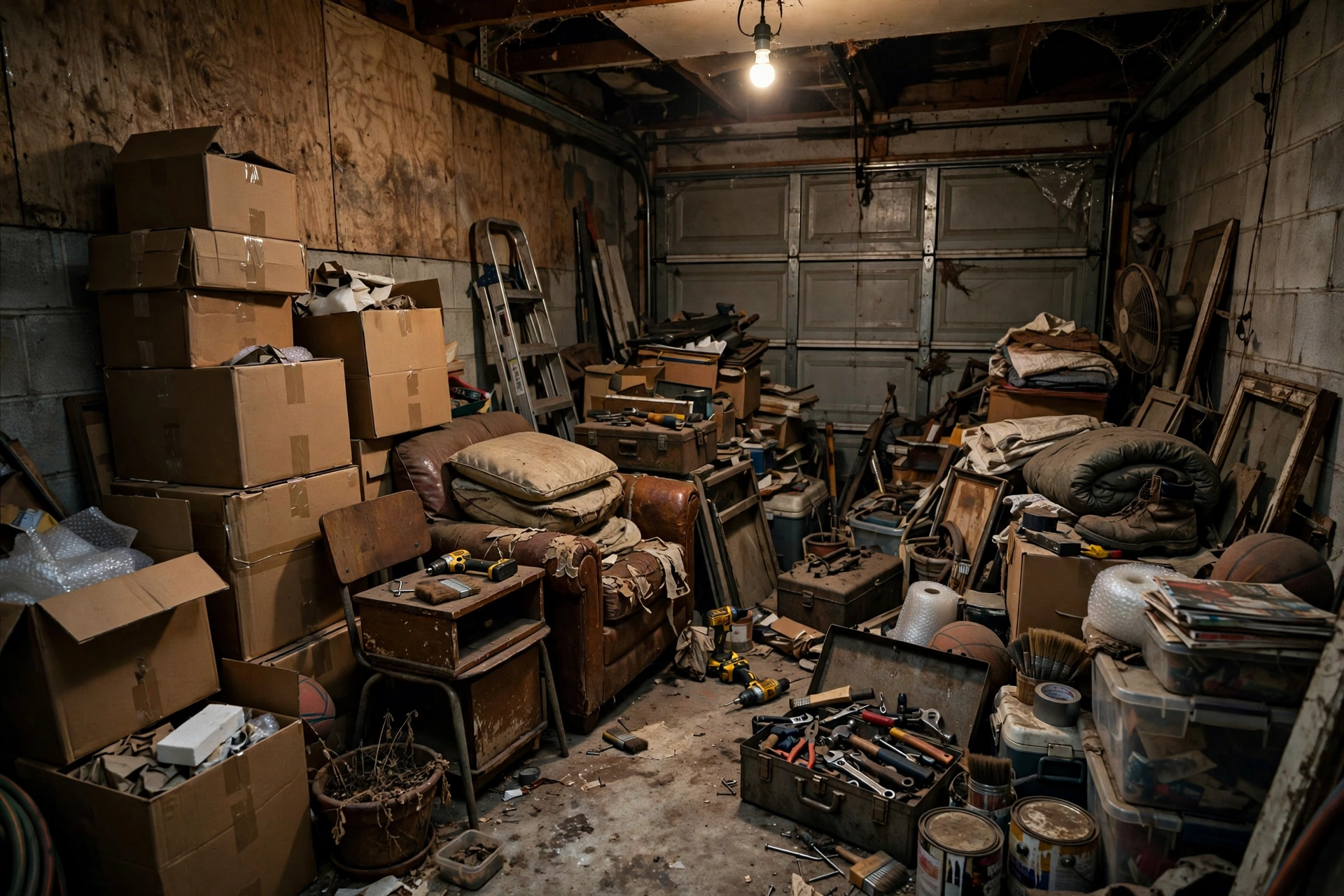
Somewhere along the way, the garage stopped being a place for cars and became the place where everything without a home goes to wait. Old paint cans, a treadmill nobody uses, boxes from three moves ago, a lawn mower that has not run since 2019. If that sounds familiar, this guide is for you. It walks through a complete garage cleanout: planning, sorting, dealing with the problem items, and deciding whether to do it yourself or bring in help.
Before You Start: Set Up for Success
Garage cleanouts fail for predictable reasons: no plan, no sorting system, and no decision about where discards go before the work starts. Fix those three things first and the rest is just labor.
Pick a day with good weather and no time pressure. A full garage cleanout takes most people a full day, sometimes a weekend, and rushing it leads to bad decisions, like throwing away things you will later miss or keeping things out of pure decision fatigue. Recruit help if you can: one extra person doubles the carrying capacity and, more importantly, provides a second opinion when you are stuck on whether something stays or goes.
Gather supplies before you touch a single box: heavy-duty trash bags, cardboard boxes or bins for sorting, labels and a marker, a dolly or hand truck for heavy items, and basic safety gear like gloves and a dust mask. Old garages are dusty, and some have rodent droppings or mold, so the mask is not optional if you are sensitive.
The Sorting System That Actually Works
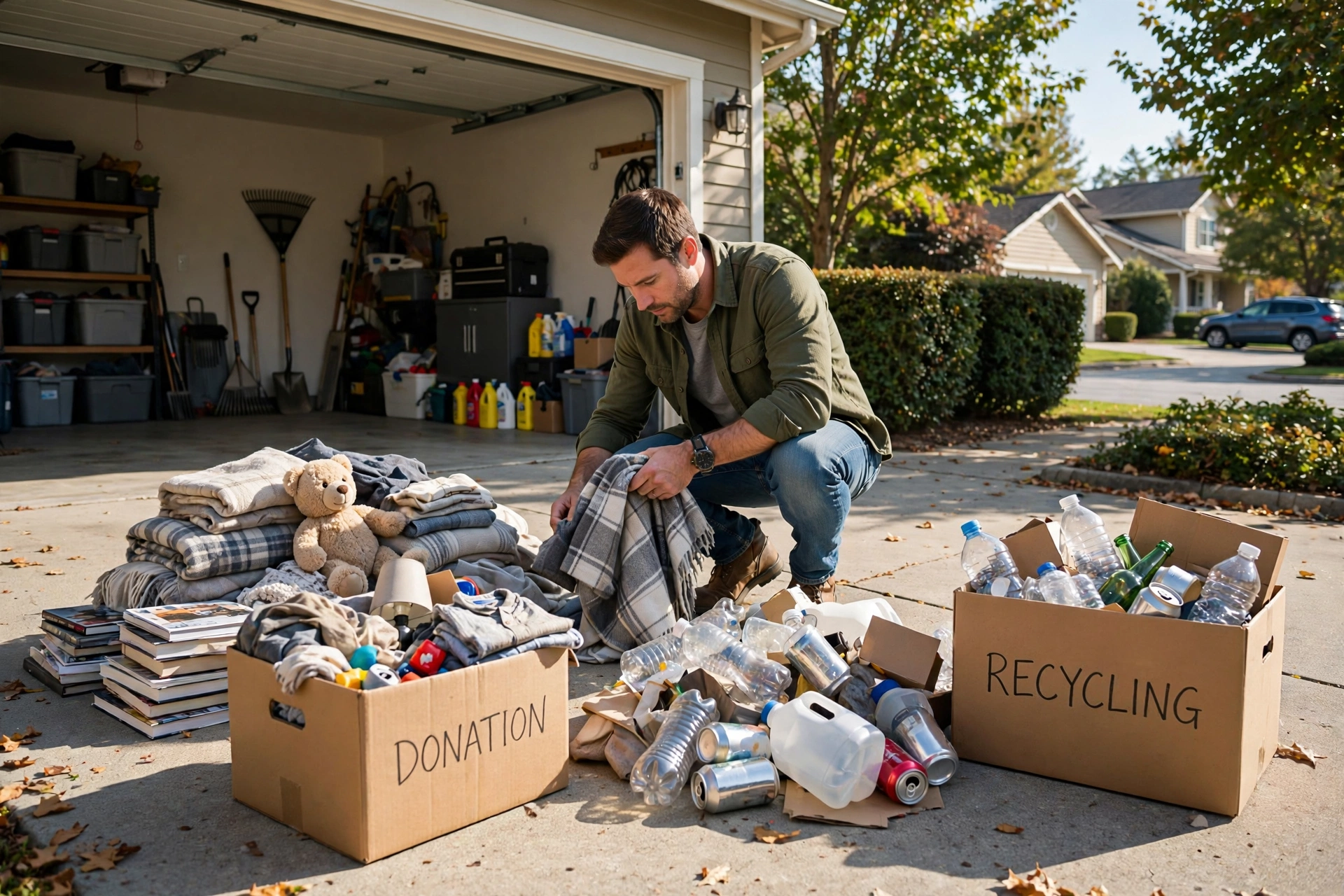
Pull everything out of the garage. Yes, everything, into the driveway or yard. This sounds dramatic, but it is the only way to see what you actually have, and it forces every item through a decision. Then sort into five zones:
- Keep and use: tools you use, sports gear in season, the lawn mower that works. These go back in, organized.
- Keep but store elsewhere: holiday decorations, keepsakes, seasonal gear. These belong in the attic, a shed, or labeled bins, not scattered across the garage floor.
- Donate or sell: working items you no longer need. Furniture, working appliances, tools in good shape, bikes the kids outgrew.
- Recycle: scrap metal, cardboard, electronics through the e-waste program, old paint through hazardous waste collection.
- Trash and haul: broken furniture, stained mattresses, rotted wood, anything that is genuinely at the end of its life.
The rule that makes this work: every item gets touched once and assigned to a zone. No "maybe" pile. The maybe pile is how garages get re-cluttered within a month. If you have not used it in two years and it has no sentimental value, it goes.
What to Do With the Problem Items
Every garage has them: the items that cannot just go in the trash. Here is how to handle the usual suspects.
Paint and chemicals. Wet paint, solvents, pesticides, and automotive fluids are hazardous waste. In Kitsap County, these go through the county's household hazardous waste program, not the trash and not a junk crew's truck. Dried-out latex paint cans (lids off, fully solid) are generally accepted as regular trash in many jurisdictions, but check current county guidance before assuming.
Electronics. Washington State's e-waste program covers TVs, computers, and monitors through designated recyclers, free of charge. Old printers, stereos, and small appliances can often go through the same channels or through scrap recyclers.
Tires. Tires carry disposal fees almost everywhere and are refused by regular trash service. Tire shops and some transfer stations accept them for a per-tire fee. Stack them separately and deal with them as their own trip.
Mattresses. A stained or broken mattress is trash, but a usable one can be donated. Many transfer stations charge a separate mattress handling fee, which is worth knowing if you are hauling it yourself.
Scrap metal. This is the good news category. Old grills, broken lawn mowers (drained of fuel and oil), metal shelving, and similar items have scrap value. Scrap yards in the Kitsap area will take them, and some will even pay a small amount by weight. At minimum, it is free disposal.
Real talk: the hazardous stuff is where cleanouts stall. People pile paint cans and chemicals in a corner "to deal with later" and later never comes. Handle the problem items first, on day one, while your energy is high. Everything after that feels easy.
Donating and Recycling Around Silverdale
Usable items should not become trash. Goodwill operates a donation center on Wheaton Way in Bremerton, and Habitat for Humanity of Kitsap County runs a ReStore that accepts furniture, appliances, and building materials. Both keep good items in the local economy. Call ahead for large items to confirm they accept what you have and whether pickup is available.
For recyclables, separate cardboard, scrap metal, and electronics before anything else. Many junk removal crews sort for donation and recycling as part of their service, so if you are hiring help, ask what they divert. If you are doing it yourself, plan the donation run and the recycling run as separate trips from the dump run; mixing them wastes the sorting you already did.
Cleanout Day: Step by Step
With sorting zones set and problem items identified, the day itself follows a simple order. First, pull everything out. Second, sort into the five zones. Third, handle problem items: load the hazardous waste for the county program, stage e-waste for the recycler, set tires aside. Fourth, load donations and get them out of the house the same day if possible; donations sitting in the driveway have a way of migrating back inside. Fifth, deal with the trash and haul pile, either by loading your own vehicle for the transfer station or having a crew take it. Sixth, sweep the empty garage, check for issues like water intrusion or pest entry points while the walls are bare, and only then put the keepers back in organized.
That last step matters more than people expect. An empty garage is a rare chance to see the space itself: the damp corner that explains the mildew smell, the gap under the side door where mice come in, the cracked concrete that needs sealing. Fix what you find before the stuff goes back, or you will be doing this again in two years.
DIY vs Hiring a Crew
The honest question is how much of the work you want to do yourself. A DIY cleanout costs you time, fuel, and transfer station tipping fees, plus the physical toll of hauling heavy items. For a moderately full garage, expect two to four trips to Olympic View Transfer Station in Bremerton in a pickup or SUV, each taking a couple of hours round trip with loading, driving, unloading, and paying the fee.
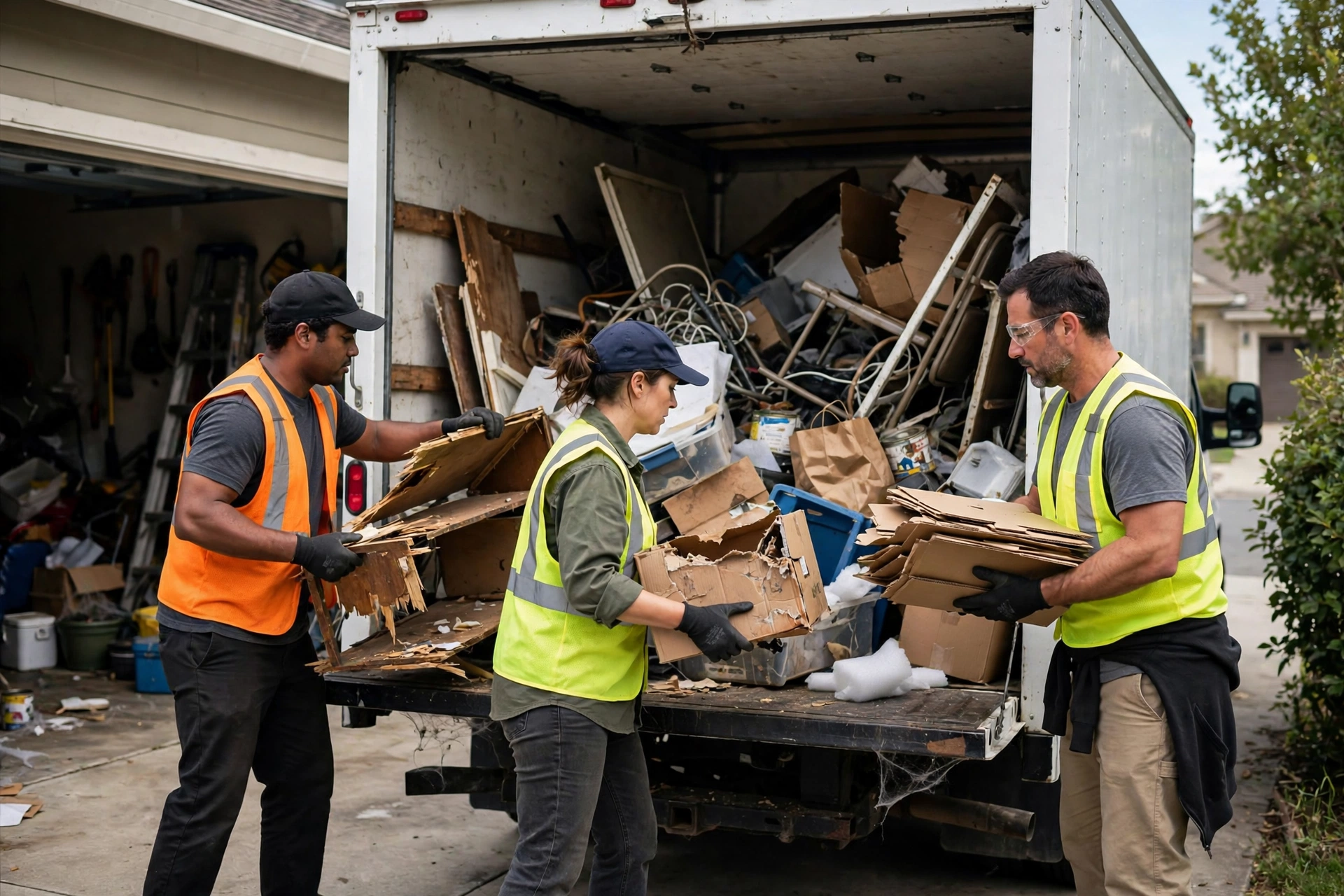
Hiring a junk removal crew flips the equation: they do all the carrying, loading, and disposal in one visit, usually one to two hours on site. Nationally, a half truckload, which covers a typical packed garage, runs $200 to $400 (HomeAdvisor, 2025). You pay more in dollars and far less in weekends.
The middle path works well for many people: do the sorting yourself (nobody can decide what stays but you), donate and recycle what you can, then hire a crew for the heavy haul pile. You keep the cost down by reducing the volume, and you skip the hardest physical work. Whichever route you choose, the sorting is the part that only you can do, so start there regardless.
Real talk: nobody regrets hiring help for the heavy stuff, but plenty of people regret paying a crew to stand around while they decide whether to keep a box of old cables. Sort first, then call. The crew's time is the most expensive part of the job, and decisions are the slowest part.
After the Cleanout: Keeping It That Way
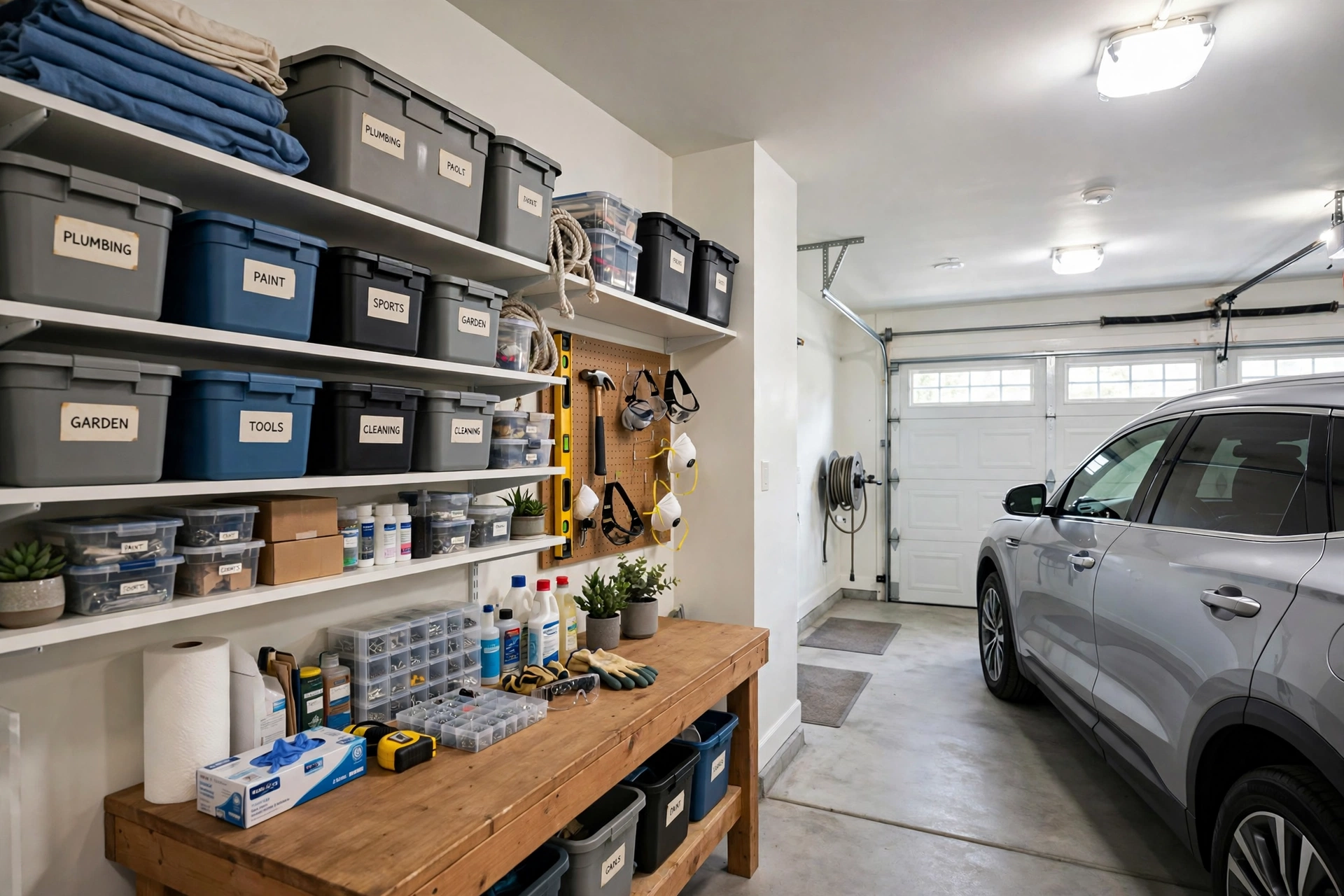
The cleanout is the hard part; staying clean is the system. Give everything a designated home: tools on wall-mounted organizers or pegboard, seasonal items in labeled bins on shelving, sports gear in one zone. The floor should be as clear as possible, both so you can actually park in the garage and so new clutter has nowhere to hide.
Adopt a one-in-one-out rule for the garage. New tool in, old tool out. And do a fifteen-minute sweep twice a year, spring and fall, to catch the slow accumulation before it becomes another full cleanout. The garages that stay clean are not owned by more disciplined people; they just have a system that makes clutter visible early.
Why Garages Fill Up: The Pattern
Garages rarely fill up in one dramatic event. They fill by slow drift: a box that was supposed to go to the attic, a chair that was supposed to go to Goodwill, a broken appliance waiting for a repair that never happens. Each item arrives with a small story about why it cannot be dealt with today, and the stories compound. Understanding the pattern helps because the fix is not a bigger garage, it is interrupting the drift.
The most common drift items are "someday" items: the treadmill you will use again, the lumber from a project you might redo, the boxes you will sort when you have time. A useful test is the cost test: if replacing the item later would cost less than the value of the garage space it occupies for years, let it go. Almost everything in a cluttered garage fails this test.
Dealing With Sentimental Items
Every garage has a box or two that stops the whole cleanout: kids' artwork, a parent's tools, things that belonged to someone who is gone. The mistake is trying to make the keep-or-toss decision at full speed in the middle of a sorting marathon. Instead, set sentimental items aside in one clearly marked bin and deal with them after the cleanout, when you are not tired and rushed.
A few techniques help. Photograph items you want to remember but do not need to keep; the photo preserves the memory at zero square feet. Keep the best representative, not the whole collection: one of your dad's tools, not all forty. And give yourself permission to keep a small, bounded amount of sentimental storage, one bin, not one wall. Sentiment is not the enemy of a clean garage; unbounded sentiment is.
Cleanouts for Specific Situations
Moving. A pre-move garage cleanout is the highest-value kind, because every item you discard is an item you do not pay to move, unpack, and find a place for. Movers charge by weight and volume, so a ruthless garage sort before moving day directly lowers the moving bill. Start this one at least a month before the move.
Downsizing. Moving from a house with a garage to a condo or apartment means the garage category has to shrink dramatically. Be honest about the new space: measure the storage you will actually have and sort to fit it. The "store elsewhere" zone disappears in a downsizing, which forces the real decisions.
Estate garages. Clearing a parent's or relative's garage mixes grief with logistics. Give yourself more time than you think you need, bring family members into the decisions about sentimental items, and consider hiring a crew for the pure-junk portion so your energy goes to the decisions only you can make. There is no prize for doing the hauling yourself when the emotional work is already heavy.
What to Do With Usable Building Materials
Garages often hold leftover lumber, partial boxes of tile, old doors, and similar building materials. If they are in usable condition, Habitat for Humanity of Kitsap County's ReStore accepts many building materials, and it is worth a call before you haul them to the transfer station. Rotted, warped, or partial materials with no reuse value are trash, but anything a remodeler could use deserves the donation attempt first. Listing usable materials on a local marketplace or community board is another option that costs nothing and often works within days.
Safety During the Cleanout
Garage cleanouts involve real physical risks, and a few precautions prevent the common injuries. Lift with your legs, not your back, and get help or a dolly for anything over fifty pounds; back injuries from moving furniture are the classic cleanout casualty. Wear gloves: old garages hide nails, splinters, broken glass, and rusted metal. Wear a dust mask when disturbing anything that has sat for years, especially if there are signs of rodents, since droppings can carry hantavirus. Keep a first aid kit and water nearby, take breaks in the heat, and keep kids and pets out of the work zone while heavy items are moving.
Chemical safety matters too. Do not mix old chemicals trying to consolidate them, do not pour solvents or oil on the ground or down drains, and transport hazardous waste to the county program in its original containers with lids secured and upright in the vehicle. If you find anything truly alarming, like unlabeled drums or suspected asbestos insulation, stop and call the county for guidance before touching it.
Choosing Storage That Lasts
What goes back into the garage deserves proper storage, or the clutter cycle restarts. Wall-mounted systems beat floor piles every time: pegboard or slatwall for hand tools, heavy-duty shelving for bins, ceiling-mounted racks for seasonal items you rarely touch. Clear bins beat opaque ones because you can see what is inside without opening them, and labels beat memory every time.
Resist the urge to buy storage products before the cleanout is done. You cannot know what you need to store until you know what is staying. Sort first, measure what remains, then buy exactly the shelving and bins that fit. This order of operations saves both money and a second trip to the store.
References
HomeAdvisor. (2025). How much does junk removal cost? https://www.homeadvisor.com/cost/cleaning-services/remove-waste/?entry_point_id=42373194
Kitsap County. (n.d.). Household hazardous waste. https://www.kitsap.gov/pw/Pages/HHW.aspx
Frequently Asked Questions
How long does a garage cleanout take?
Most homeowners need a full day to a full weekend for a packed two-car garage, depending on how much sorting is involved. The sorting decisions take longer than the hauling. If you hire a crew for the haul pile, their portion usually takes one to two hours on site.
What should I do with old paint cans?
Wet paint, solvents, and similar chemicals are hazardous waste and go through Kitsap County's household hazardous waste program, not the trash. Fully dried latex paint (lids off, solid throughout) is generally accepted as regular trash, but check current county guidance first.
Where can I donate furniture near Silverdale?
Goodwill has a donation center on Wheaton Way in Bremerton, and Habitat for Humanity of Kitsap County operates a ReStore accepting furniture, appliances, and building materials. Call ahead for large items to confirm acceptance and pickup options.
How much does it cost to have a garage cleaned out?
Nationally, a half truckload covering a typical packed garage runs $200 to $400 for full-service junk removal (HomeAdvisor, 2025). DIY costs are mainly your time, fuel, and transfer station tipping fees at Olympic View Transfer Station in Bremerton.
Can junk removal crews take everything from my garage?
Almost everything, with the standard exceptions: hazardous waste like wet paint and chemicals, fuel-burning equipment with gas still in it, and similar prohibited items. Pull those aside for the county hazardous waste program and let the crew handle the rest.
How do I keep my garage from getting cluttered again?
Give everything a designated home with wall organizers and labeled bins, keep the floor clear, follow a one-in-one-out rule for new items, and do a fifteen-minute sweep twice a year to catch accumulation early.
Have a Job That Fits This Topic?
Call now for a free, no-obligation on-site quote.
Call (360) 979-2579