Junk Removal vs Dumpster Rental in Silverdale, WA: 2026 Comparison
Two ways to get rid of a lot of stuff at once. Here is how they differ in cost, labor, and hassle, and how to pick the right one for your job.
When the pile gets too big for the weekly trash cart, most homeowners in Silverdale end up choosing between two options: hire a junk removal crew that does everything for you, or rent a dumpster and load it yourself over several days. Both get the job done. They differ a lot in price structure, in how much of your own time they demand, and in which jobs they suit best. This guide compares them head to head using published national cost data, so you can make the call with real numbers.
As with our cost guide, every price range below is labeled as national data from published sources. Local Silverdale pricing moves with labor rates, fuel, and Kitsap County disposal fees, so use these as planning benchmarks and get local quotes for your specific job.
How Full-Service Junk Removal Works
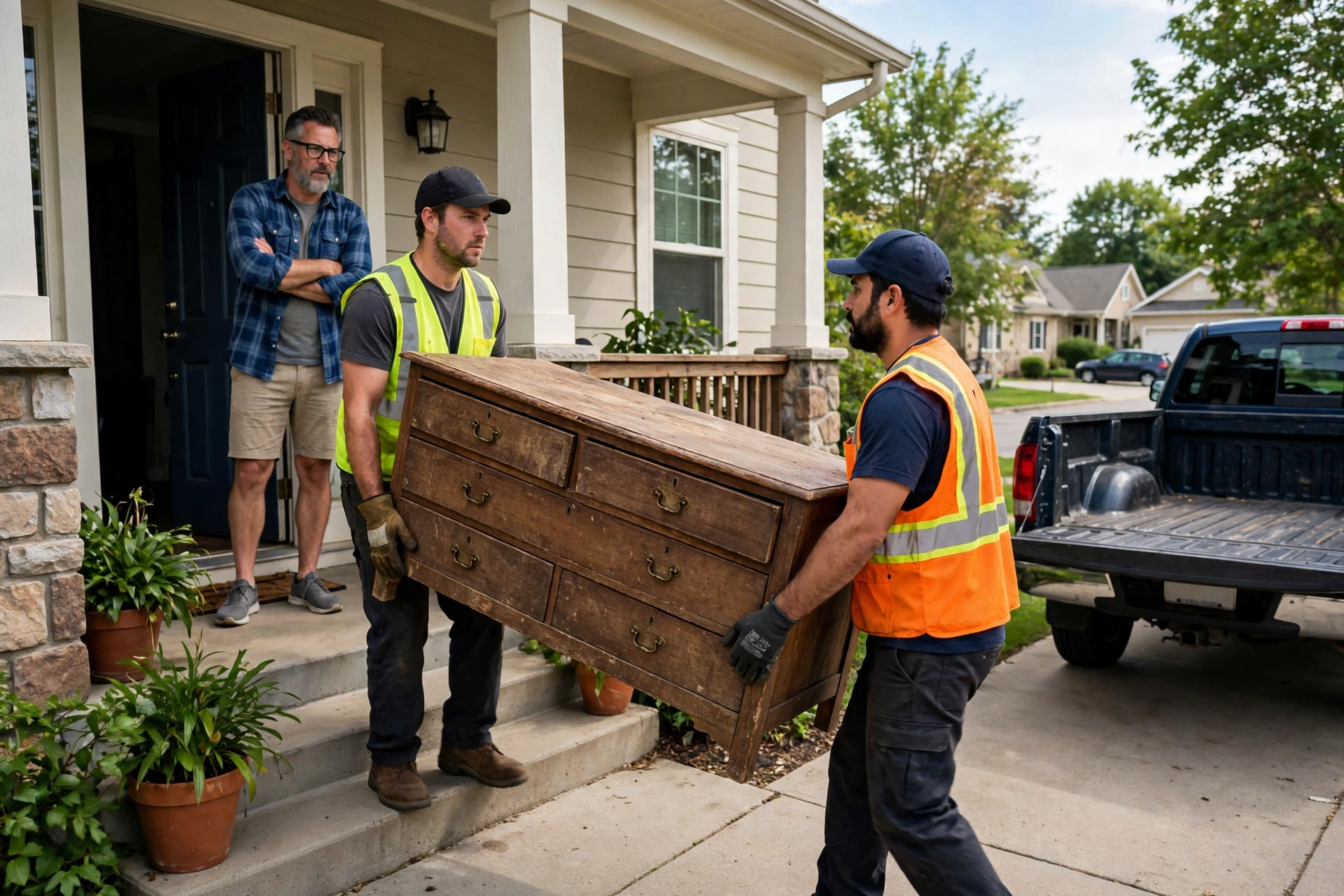
Full-service junk removal is the done-for-you option. You call or book online, a two-person crew arrives, usually with same-day or next-day availability, and they do everything: carry items out of the house, load the truck, sweep up, and haul it all away. You point at what goes and what stays. The crew estimates the truck fraction your load will fill, gives you a firm written price before starting, and most jobs are finished within an hour or two.
Pricing is volume-based. A standard truck holds 13 to 17 cubic yards, and you pay for the fraction you fill: an eighth, a quarter, a half, and so on. Nationally, that runs $75 to $125 for an eighth of a load up to $600 to $800 for a full truckload (HomeAdvisor, 2025), with the average job landing around $240 to $250 (industry data aggregated from Angi, 2026). Labor, hauling, and disposal fees are bundled into the one price. You do no lifting, no sorting for the dump run, and no driving.
How Dumpster Rental Works
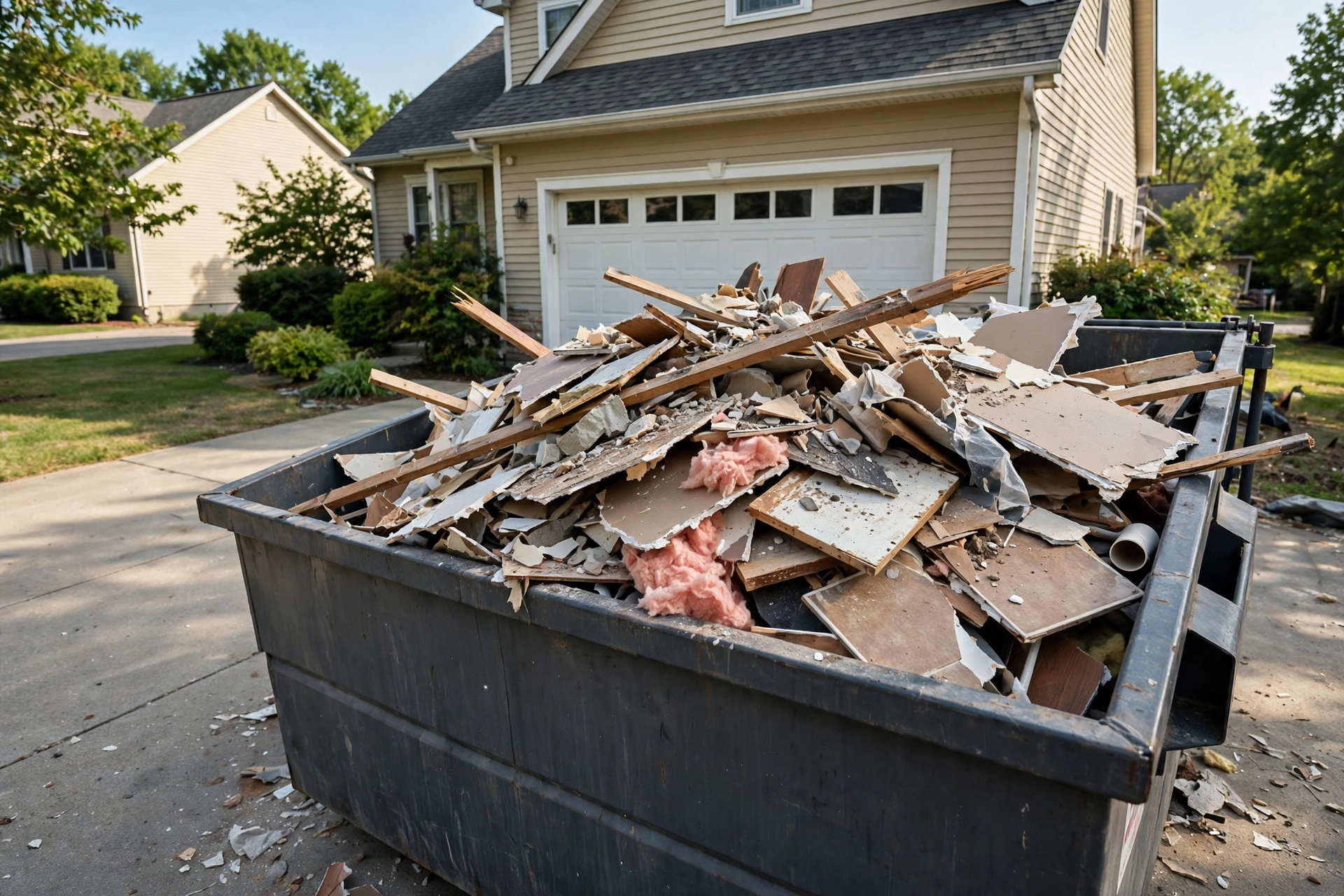
Dumpster rental is the do-it-yourself option. A company drops a large metal container, usually 10 to 40 cubic yards, in your driveway or yard. You load it yourself over the rental period, typically a week, and the company hauls it away when you are done or when it is full. You supply all the labor: carrying, lifting, breaking down, and tetris-packing the container so the space gets used well.
Pricing is size-based plus time. Nationally, a 10-yard dumpster rents for $225 to $575 per week, a 20-yard for $275 to $700, a 30-yard for $300 to $725, and a 40-yard for $350 to $800 (HomeAdvisor, 2025). Those base prices usually include delivery, pickup, and a weight allowance, often a ton or two. Go over the weight limit and overage fees apply, typically $50 to $100 per extra ton. Keep the dumpster longer than the included rental period and daily extension fees kick in.
Cost Comparison: Head to Head
The honest answer to "which is cheaper" is that it depends on the size of the job and how you value your own time. Here is how typical scenarios compare using national data:
| Job Size | Junk Removal (National Avg.) | Dumpster Rental (National Avg.) |
|---|---|---|
| Small (few items, 1/8 truck) | $75 to $125 | $225 to $575 (10-yard, 1 week) |
| Medium (garage cleanout, 1/2 truck) | $200 to $400 | $225 to $575 (10-yard, 1 week) |
| Large (estate cleanout, 3/4 truck) | $400 to $600 | $275 to $700 (20-yard, 1 week) |
| Full truck / whole house | $600 to $800 | $275 to $700 (20-yard, 1 week) |
The pattern is clear. For small to medium jobs, full-service junk removal is usually cheaper, because you are not paying for a whole dumpster and a whole week to move a quarter truck of stuff. For large jobs, especially ones that stretch over many days, a dumpster can win on pure dollars, since one 20-yard container at $275 to $700 holds roughly what a junk crew would charge $600 to $800 to haul.
But the table leaves out the biggest variable: your labor. Loading a 20-yard dumpster is a serious physical job. It can take a full weekend or more of carrying, lifting, and climbing in and out of the container. If you value that time at anything at all, the math shifts back toward the crew.
Real talk: most people overestimate how much they will enjoy loading a dumpster and underestimate how long it takes. A "quick weekend project" becomes three weekends of staring at a half-full container in the driveway. If your motivation has a shelf life, factor that in.
When Junk Removal Is the Better Choice
Junk removal wins in several common situations. When the job is small to medium, a quarter truck or less, the crew is almost always cheaper than a dumpster once you count the rental minimum. When items are heavy or awkward, like a sleeper sofa, a treadmill, or a cast-iron tub, professional crews have the equipment and the technique, plus the insurance if something goes wrong. When you need it gone fast, same-day or next-day crew service beats waiting for a dumpster delivery slot. And when the pile includes items that need special handling, like refrigerators with refrigerants or electronics with e-waste fees, a good crew sorts that out as part of the job.
It is also the better choice when access is tricky. Crews carry items out from basements, attics, and back rooms as a matter of routine. With a dumpster, you are the one navigating the stairs with a dresser.
When a Dumpster Makes More Sense
Dumpsters earn their keep on bigger, longer jobs. A home renovation that generates debris over two or three weeks is the classic dumpster job: the container sits there while work progresses, and you toss waste in as you go. Estate cleanouts where family members are sorting through belongings over many days also suit the dumpster model, since nobody is paying a crew to stand around while decisions get made. Roofing tear-offs, landscaping overhauls, and any project generating heavy debris like concrete or dirt favor dumpsters too, because the weight allowances are built for it.
The key question is duration. If the job genuinely needs many days of intermittent loading, the dumpster's weekly rental model fits. If everything could be carried out in an afternoon, you are paying for six days of container-sitting that you do not need.
The Hidden Costs of Dumpster Rental
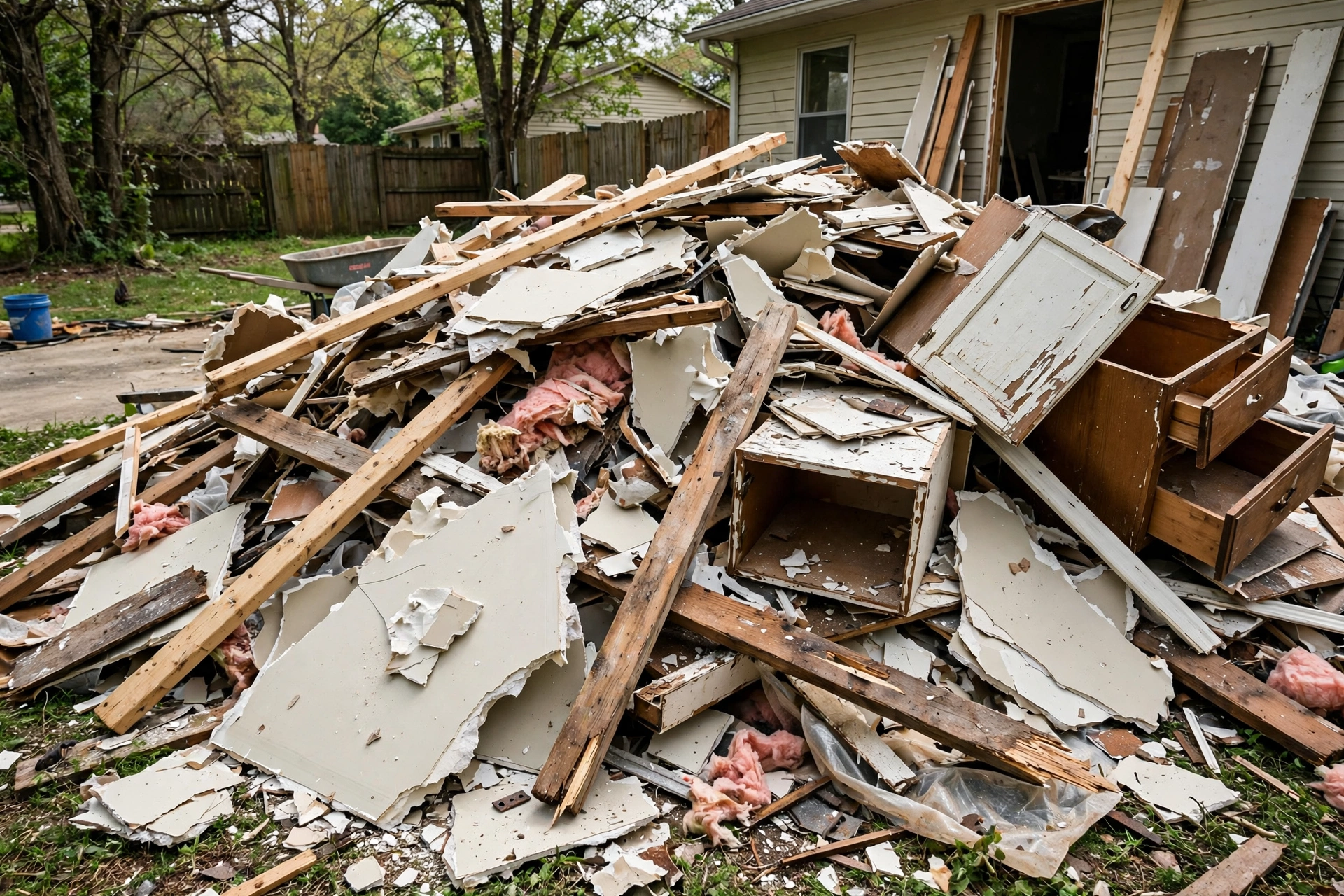
Dumpster base prices look simple, but several add-ons catch first-timers off guard. Overage fees are the big one: exceed the included weight allowance and you pay per extra ton, often $50 to $100 a ton. Dense materials like roofing shingles, tile, or dirt hit weight limits long before the container looks full. Extension fees apply if the project runs past the included rental days. Permit fees may apply if the dumpster sits on a public street rather than your driveway; in many Washington municipalities, a right-of-way permit is required, and the rental company will tell you, but the fee and the paperwork are usually yours.
Then there are the costs nobody lists. A fully loaded roll-off dumpster weighs several tons, and it can crack or stain a driveway, especially asphalt in warm weather. Some companies offer driveway protection boards; ask. And if prohibited items end up in the container, like paint, chemicals, or tires, the hauler can charge contamination fees or refuse the load until you remove them.
Time, Labor, and the Real Price
Do an honest accounting of the dumpster option. You will spend time researching sizes and getting quotes, waiting for delivery, then doing all the physical loading: carrying, lifting, breaking down furniture, and packing the container efficiently. Poor packing wastes an astonishing amount of space; a badly loaded 20-yard dumpster can hold barely more than a well-loaded 10-yard one. Then there is the return to normal: the container leaves, and you deal with whatever it did to the driveway.
None of that is a reason to avoid dumpsters. It is a reason to price your own time into the comparison. A junk removal crew at $400 that finishes in ninety minutes versus a $350 dumpster plus two full weekends of your labor is not really a $50 decision.
Real talk: the dumpster industry makes its money on the gap between what people think they will load in a weekend and what actually happens. Be brutally honest about your schedule, your back, and your tolerance for a giant metal box in your driveway. Then choose.
Kitsap County Specifics
A few local notes. Kitsap County has no landfill inside its borders, so everything a dumpster hauler collects goes through Olympic View Transfer Station in Bremerton, just like a junk crew's load. Tipping fees are weight-based, which is why dumpster weight allowances matter so much here.
If the dumpster needs to sit on the street rather than your driveway, check whether your city requires a right-of-way or street-use permit. Requirements vary by municipality around the Kitsap Peninsula, and the rental company may not handle the permit for you. Also note that some homeowner associations restrict how long a dumpster can sit visible in a driveway, so check HOA rules before booking a multi-week rental.
For items with special disposal rules, Washington State's e-waste program covers TVs, computers, and monitors through designated recyclers, and Kitsap County runs a household hazardous waste program for paint, chemicals, and similar materials. Neither a dumpster hauler nor a junk crew will take hazardous waste, so plan a separate trip for those items regardless of which option you choose.
A Simple Decision Framework
Run through these questions. Is the job a quarter truck or less? Choose the crew. Will loading take more than a few days of intermittent work? Consider the dumpster. Is anyone involved unable or unwilling to do heavy lifting? Choose the crew. Is the debris mostly heavy construction material? Lean dumpster. Do you need it gone this week with zero effort on your part? Choose the crew. Are you renovating over several weeks? Choose the dumpster.
When in doubt, get both quotes. A junk crew's on-site estimate is free, and a dumpster quote takes one phone call. With both numbers and an honest assessment of your time, the right choice is usually obvious.
What Junk Crews Will Not Take
For all their convenience, junk crews have limits. Hazardous waste is the big one: wet paint, solvents, pesticides, asbestos-containing materials, and similar items are refused by virtually every junk removal company and every dumpster hauler. These need Kitsap County's household hazardous waste program, which exists specifically for them. Crews also typically refuse items they cannot safely lift or transport, like full chemical drums, and most will not take vehicles (that is a separate towing and salvage process).
Fuel-burning equipment needs care too. A lawn mower or chainsaw with gas still in the tank is a no-go until drained. Refrigerators and freezers are accepted, but the refrigerant has to be recovered first, which is why they cost more. Knowing these limits in advance saves an awkward conversation on pickup day: pull the hazardous items aside and handle them through the county program, and let the crew take everything else.
The Hybrid Approach: Using Both
Sometimes the smartest move is not choosing one option but sequencing them. A common pattern for estate cleanouts: rent a small dumpster for the true trash that accumulates over weeks of sorting, then bring in a junk crew for one final sweep of the heavy furniture and awkward items the family could not move. You get the dumpster's low cost per cubic yard for the bulk waste and the crew's muscle for the hard part.
Another hybrid: do the easy part yourself and hire out the rest. Load your car with donations for Goodwill and the ReStore over a weekend, haul the e-waste to a recycler, then call a crew for the remaining furniture and junk. You have cut the billable volume substantially, and the crew's visit is quick. There is no rule that says one company has to handle every item.
Questions to Ask Before You Book Either Option
Whether you call a junk crew or a dumpster company, a few questions protect you. Ask what the price includes and, just as important, what triggers extra charges. Ask about the weight allowance and the overage rate for dumpsters, or the truck fraction estimate and minimum charge for crews. Ask where the material goes after pickup: a company that sorts for donation and recycling is doing more work than one that dumps everything at the transfer station, and you deserve to know which you are paying for.
Ask about timing and access. When can they come, how long will the job take, and what do they need from you (clear driveway, unlocked gate, items consolidated)? Ask about insurance and licensing, and ask what happens if something is damaged. The answers should be quick and confident. Hesitation on any of these is information.
Environmental Considerations
Where your stuff ends up differs between the two options, and it is worth asking about. Full-service crews that sort loads can divert a meaningful share to donation and recycling: usable furniture to charities, scrap metal to recyclers, cardboard and yard waste to the right streams. Not every company does this, so ask directly what percentage of a typical load gets diverted and where donations go.
Dumpster contents, by contrast, almost always go straight to the transfer station as mixed waste, because the hauler has no sorting step. If keeping usable items out of the waste stream matters to you, pull donations and recyclables out before the dumpster arrives, or choose the crew option with a company that sorts. Either way, the environmental outcome is mostly determined by what you do before pickup day, not after.
References
HomeAdvisor. (2025). How much does junk removal cost? https://www.homeadvisor.com/cost/cleaning-services/remove-waste/?entry_point_id=42373194
HomeAdvisor. (2025). How much does it cost to rent a dumpster? https://www.homeadvisor.com/cost/cleaning-services/rent-a-dumpster/
ConsumerAffairs. (2026). How much is a dumpster rental? https://www.consumeraffairs.com/movers/how-much-is-a-dumpster-rental.html
Frequently Asked Questions
Is it cheaper to rent a dumpster or hire junk removal?
For small to medium jobs, junk removal is usually cheaper: a quarter truck runs $125 to $200 nationally versus a $225 to $575 minimum for a 10-yard dumpster rental (HomeAdvisor, 2025). For large, multi-day jobs, a dumpster often wins on pure dollars, but factor in the value of your own loading labor.
How long can I keep a rented dumpster?
Most residential rentals include about 7 days. Keeping it longer triggers daily extension fees, so confirm the included rental period and the per-day overage rate before you book.
What cannot go in a rented dumpster?
Hazardous materials are universally prohibited: paint, chemicals, solvents, asbestos, and similar items. Tires, batteries, and sometimes electronics and appliances carry surcharges or are banned. Ask the hauler for their prohibited list before loading.
Do I need a permit for a dumpster in Silverdale?
It depends on placement. A dumpster fully on your private driveway typically needs no permit. One sitting on a public street or sidewalk may require a right-of-way permit from the city, and HOAs may have their own rules about duration and placement. Check before delivery day.
How much can I fit in a 20-yard dumpster?
A 20-yard dumpster holds about 20 cubic yards, roughly equivalent to 6 to 8 pickup truck loads, and suits whole-home cleanouts or large renovation projects. Remember that weight limits matter as much as volume: dense debris like concrete or roofing hits the tonnage cap fast.
Will a dumpster damage my driveway?
It can. A loaded roll-off dumpster weighs several tons and can crack or stain asphalt and concrete. Ask the rental company about driveway protection, such as wooden boards under the container rails, especially on asphalt in warm weather.
Have a Job That Fits This Topic?
Call now for a free, no-obligation on-site quote.
Call (360) 979-2579