Junk Removal Cost in Silverdale, WA: 2026 Complete Guide
What a junk removal job actually costs, how crews price their work, and how to tell a fair quote from a bad one before anyone lifts a finger.
If you have ever stared at a garage full of old furniture and wondered what it would cost to make it all disappear, you are not alone. Junk removal pricing confuses almost everyone the first time they look into it. One company quotes by the truckload, another charges per item, a third wants to come look before naming any number at all. This guide lays out how pricing actually works, what the national numbers look like in 2026, and what specifically affects the price of a job in Silverdale and the surrounding Kitsap County area.
One important note before we start: every price range in this guide comes from published national cost data, and each one is labeled as such. Local quotes in Silverdale can land above or below these ranges depending on the job. No reputable company prices a job sight unseen over the phone, and any number here is a planning benchmark, not a quote.
How Junk Removal Companies Actually Price a Job
Most professional junk removal companies price by volume, meaning how much space your stuff takes up in their truck. A standard junk removal truck holds roughly 13 to 17 cubic yards, and crews mentally divide that box into fractions: an eighth of a truck, a quarter, a half, three quarters, and a full load. When a crew gives you an on-site quote, they are estimating which fraction your pile will fill, then applying their rate for that fraction.
This is why two neighbors can pay very different amounts for what looks like a similar job. A pickup truck bed of bagged household trash might be an eighth of a load. A garage full of furniture could be half a truck. The pricing follows the space, not the weight, in most cases, though extremely heavy materials like dirt, concrete, or roofing shingles are sometimes priced differently because of transfer station tipping fees, which are charged by weight.
Some companies also offer per-item pricing for single pieces, like one sofa or one refrigerator. This is convenient for small jobs, but the per-item price is almost always higher per cubic foot than the volume rate, because the company still has to send a truck and a crew for one item.
National Average Junk Removal Costs in 2026
The figures below come from HomeAdvisor's 2025 national cost data for junk removal, which remains the most widely cited benchmark available. Treat these as national averages, not Silverdale-specific prices. Local labor rates, fuel costs, and Kitsap County disposal fees all push local numbers around.
| Truck Load | Volume (Cubic Yards) | National Average Cost |
|---|---|---|
| 1/8 load | 2 to 3 | $75 to $125 |
| 1/4 load | 3 to 4.5 | $125 to $200 |
| 1/2 load | 4.5 to 11 | $200 to $400 |
| 3/4 load | 11 to 13 | $400 to $600 |
| Full load | 13 to 17 | $600 to $800 |
Across all job sizes, the national average for a typical junk removal job sits around $240 to $250, according to 2026 industry reporting that aggregates data from Angi and similar platforms. Single-item pickups can start as low as $60 to $150, while large or complex jobs, like full estate cleanouts or hoarding situations, can run past $1,000.
What Each Load Size Looks Like in Real Life
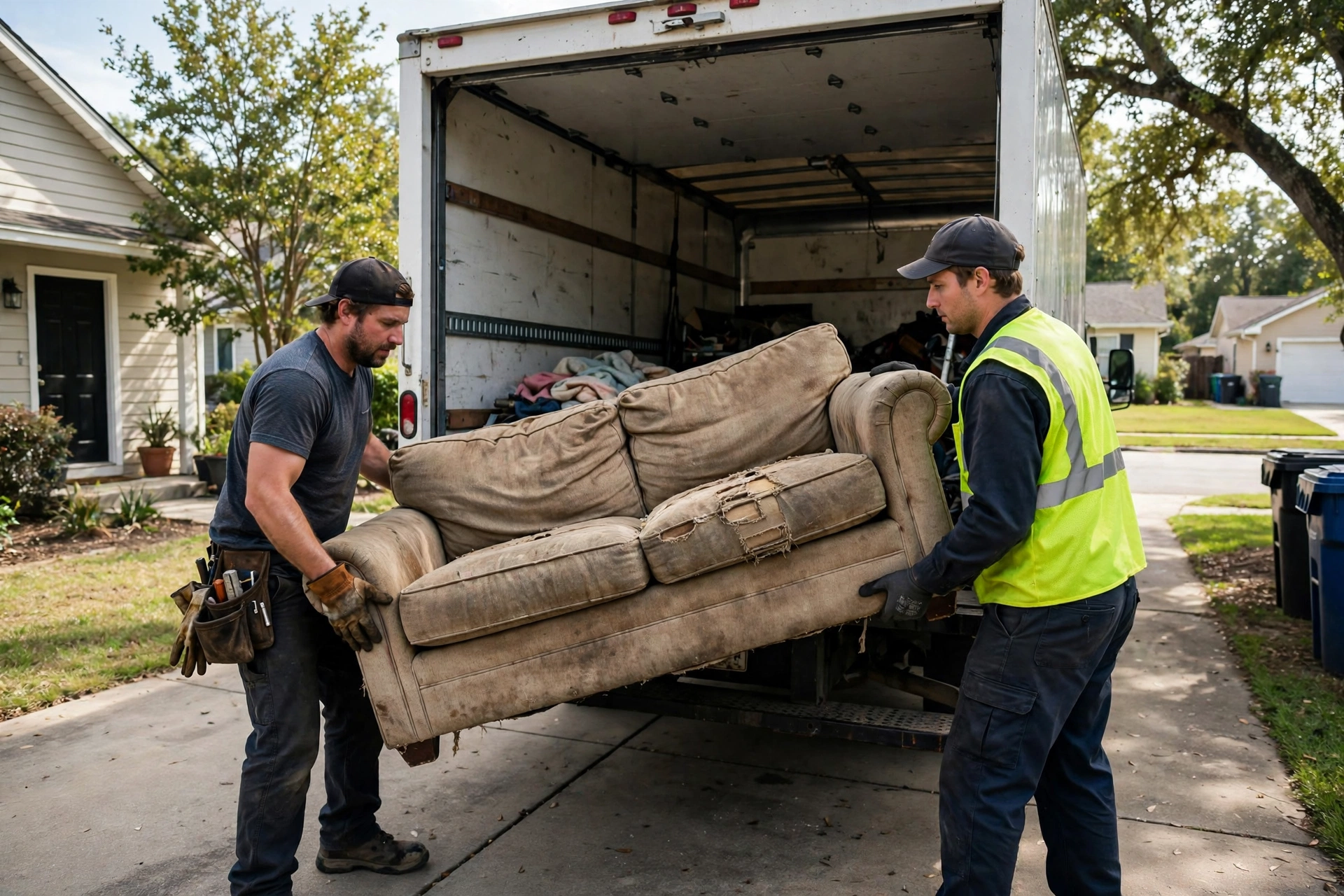
Truck fractions are abstract until you picture your own stuff in them. Here is a rough translation. An eighth of a truck is a few boxes, a chair, and some bagged trash, the kind of pile that fits in the back of a pickup. A quarter load is a small bedroom cleanout: a mattress, a dresser, several boxes. A half load covers a multi-room cleanout or a typical packed garage. Three quarters is a large estate cleanout or a serious renovation debris pile. A full load is a whole-house cleanout or the aftermath of a major remodel.
These are approximations, and every company's truck is a slightly different size, but the fractions are the industry's common language. When you describe your job over the phone, speaking in these terms helps the company give you a realistic ballpark and send the right crew.
Cost by Item Type
Volume is the main driver, but certain items carry their own pricing logic because of disposal rules or labor. The national ranges below come from HomeAdvisor's 2025 data:
- Furniture: $80 to $400 per piece, depending on size. A small armchair sits at the low end; a sectional sofa at the high end.
- Mattresses: $75 to $150 per piece. Many transfer stations charge a separate mattress handling fee, which gets passed through.
- Major appliances: $60 to $250. Refrigerators cost more than washers because refrigerants must be recovered by certified technicians before the unit can be scrapped.
- Yard waste: $70 to $500, depending on volume. Brush and branches are bulky but light, so they fill a truck fast.
- Electronics: $20 to $200. TVs and monitors carry e-waste recycling fees in Washington State.
- Construction debris: $100 to $800 per truckload. Heavy materials like tile, concrete, and roofing can trigger weight-based surcharges.
- Pianos: $200 to $400 for an upright. Baby grands and grands run higher and need specialty movers, not a standard junk crew.
- Hot tubs: $200 to $600. The tub has to be drained, cut into sections, and hauled out in pieces, which is labor-intensive.
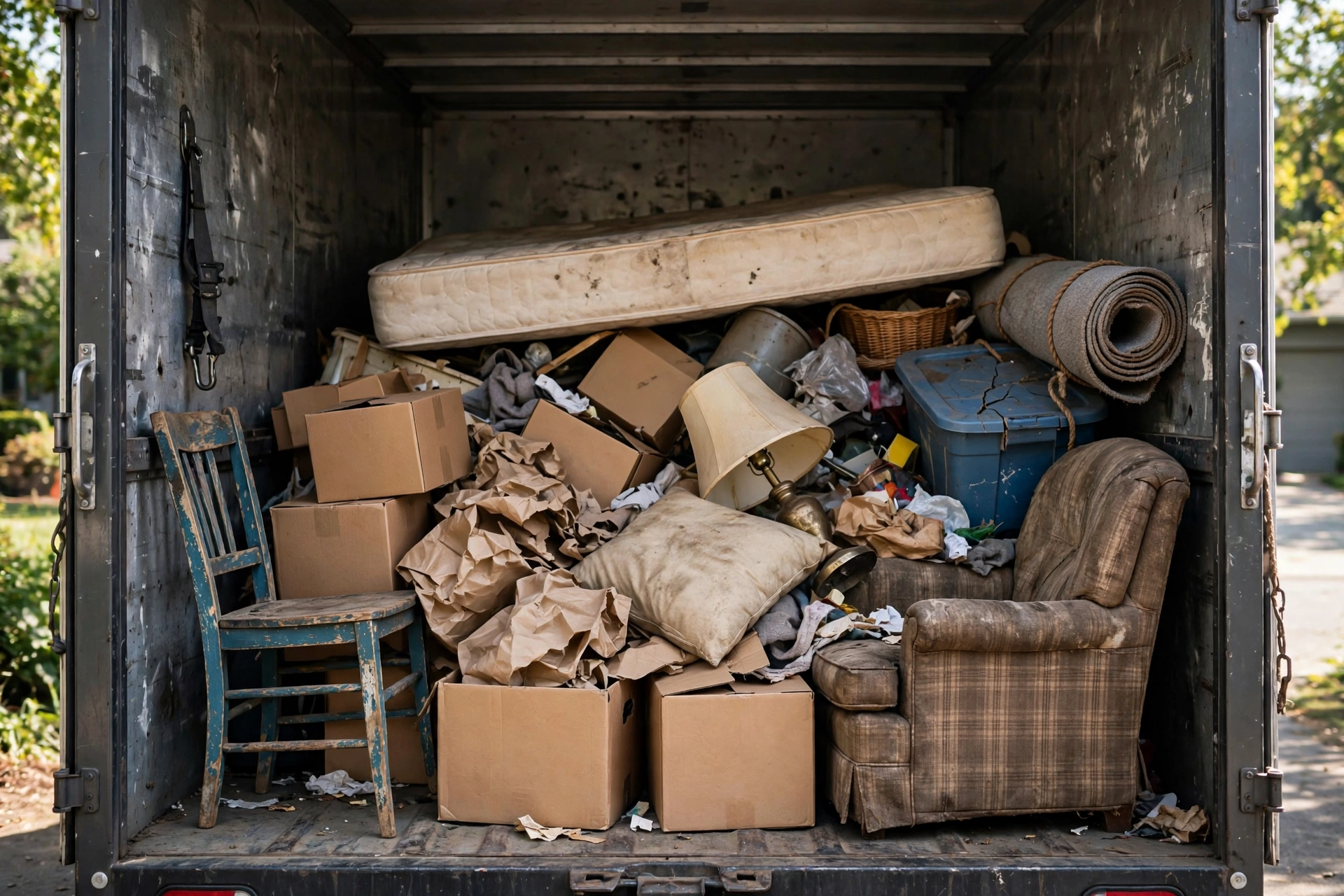
Real talk: the cheapest quote is not always the cheapest job. A crew that quotes low over the phone and then doubles the price on site has cost you a morning and a lot of frustration. A slightly higher quote from a company that insists on seeing the job first is usually the honest one.
What Affects the Price in Silverdale and Kitsap County
National averages are a starting point, but several local factors move the needle here.
Disposal logistics. Kitsap County does not operate a landfill inside its borders. Everything that is not donated or recycled goes through Olympic View Transfer Station in Bremerton and is then trucked out of county. Transfer stations charge tipping fees by weight, and those fees are baked into every local quote. Heavy loads cost the company more to dump, and that shows up in the price.
Access and labor. A pile sitting in an open driveway is the cheapest possible job. The same pile in a basement, up a flight of stairs, or at the back of a cluttered garage takes more crew time, and time is the other half of the pricing equation. If items need disassembly, like a sectional sofa that will not fit through a door, or a shed that needs partial teardown, expect the quote to reflect it.
Donation and recycling sorting. Some companies sort every load for donations and recyclables before anything heads to the transfer station. That takes extra time on site, but it keeps usable furniture and scrap metal out of the waste stream. Whether a company sorts or dumps everything in one load is worth asking about, because it affects both the price and where your stuff ends up.
Seasonal demand. Spring and summer are the busy season for junk removal everywhere, and the Kitsap Peninsula is no exception. Booking during the fall or winter can sometimes mean faster scheduling and occasionally better pricing, though reputable companies do not wildly swing their rates by season.
Minimum Charges and Single-Item Pickups
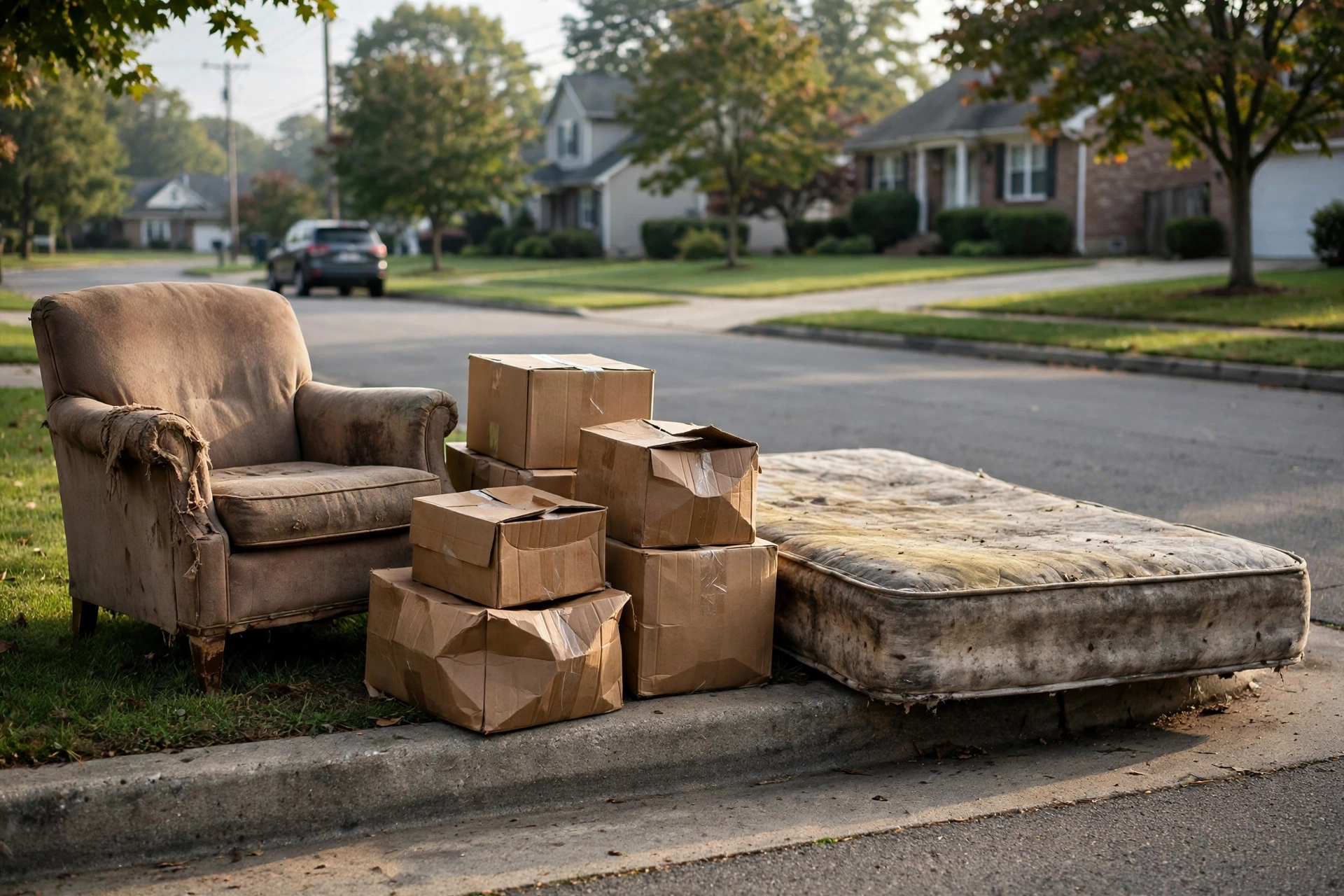
Almost every junk removal company has a minimum charge, usually in the $75 to $150 range nationally. The truck, the fuel, and the crew's time cost the same whether they are hauling one armchair or a quarter truck. If you only have a single item, ask about the minimum before booking so you are not surprised.
Single-item pricing makes sense when you genuinely have one thing to go. If you have three or four items, the volume rate for an eighth or quarter load is almost always cheaper than paying per-item prices on each piece. A good crew will tell you which pricing works out better for your specific pile.
How On-Site Quotes Work
The standard process for a reputable company looks like this. You describe the job by phone or through a website form. The company schedules a free on-site estimate, usually with same-day or next-day availability. The crew looks at the pile, estimates the truck fraction, notes any complications like stairs or disassembly, and gives you a firm written price. If you accept, they usually do the job on the spot. If you decline, you owe nothing.
The on-site quote matters because photos can be misleading. A photo cannot show that the "few boxes" are packed with books, or that the sofa is wedged behind a water heater. Companies that quote firm prices from photos alone are guessing, and the guess usually gets revised upward on arrival. An in-person look protects both sides.

Ways to Keep Your Cost Down
A few practical moves can meaningfully lower the bill. First, consolidate everything into one accessible pile before the crew arrives. Time on site is money, and a crew that can load continuously without hunting through rooms finishes faster. Second, separate out anything you can donate yourself. A working dresser dropped at a donation center is one less item in the truck. Third, be honest about what is there when you book. Surprises on arrival, like a hidden hot tub behind the garage, lead to revised quotes, not the original number. Fourth, if your job is small, ask about the minimum charge and whether combining with a neighbor's pickup is an option. Some crews will happily quote two small jobs on the same street in one trip.
Red Flags in Junk Removal Pricing
Watch for a few warning signs. A company that demands payment in full before seeing the job is one. A quote that seems impossibly low, like a full truck for the price of a quarter load, is another; the price almost always grows on site. Vague answers about where items go after pickup suggest everything is going straight to the transfer station with no sorting, which is legal but worth knowing. And any company that cannot show proof of licensing and insurance is not worth the risk, because if a crew member is injured on your property or your driveway is damaged, you want coverage in place.
Real talk: nobody can give you a real price for your specific garage without looking at it. National averages are great for budgeting, but the only number that matters is the written quote from the crew standing in front of your pile. Get that in writing before anything gets loaded.
What a Written Quote Should Spell Out
A proper written quote is more than a number on a scrap of paper. It should state the estimated truck fraction, list any items priced separately (like a refrigerator or a hot tub), note access complications the crew observed (stairs, long carry distance, disassembly), and confirm that the price includes labor, hauling, and disposal fees. It should also state what happens if the job turns out bigger than estimated. Most reputable companies will tell you upfront: if we find more than we quoted for, we stop, show you, and agree on the revised price before continuing. That is the arrangement you want.
Pay attention to what the quote does not say, too. If there is no mention of disposal fees, ask whether they are included. If the quote does not mention a minimum, ask what happens if the job ends up smaller than expected. Clear answers to these questions are the mark of a company that has done this many times before.
Special Situations: Estates, Evictions, and Hoarding Cleanouts
Not every job is a garage cleanout. Estate cleanouts, eviction cleanouts, and hoarding situations each come with their own pricing dynamics, and it helps to know what to expect.
Estate cleanouts usually involve a full house of mixed contents: furniture, boxes, clothing, kitchenware, and often decades of accumulation. Nationally, these run from $500 to well past $1,000 depending on volume, because they are typically three-quarter to full truckloads, sometimes more than one load. The sorting burden is real here, since estates mix valuables, donations, and trash in every room. Many families handle the valuables and donations themselves first, then bring in a crew for what remains, which keeps the bill focused on actual junk.
Eviction and foreclosure cleanouts are similar in volume but often need faster scheduling. Landlords usually want the unit cleared quickly so it can be re-rented. If you are a landlord in this situation, having everything already bagged or piled cuts the crew's time significantly.
Hoarding cleanouts are the most variable jobs in the industry. National estimates for serious hoarding situations start around $1,000 and can reach $3,000 or more, because they involve multiple truckloads, health and safety precautions, and often coordination with the homeowner or a social worker. These jobs are priced carefully and slowly, and any company that quotes one sight unseen should be avoided.
Booking and Scheduling Tips
A little planning around scheduling can make the whole job smoother. If your timeline is flexible, ask the company when their next open window is rather than demanding a specific day; crews can often fit flexible jobs in sooner. Morning appointments tend to run on time, while late-afternoon slots can slip if earlier jobs run long, which is normal in a business where every job is a little different from the last.
Before the crew arrives, do three things. First, make sure there is clear access: move cars out of the driveway, unlock gates, and clear a path to the pile. Second, separate anything that is not going: it is surprisingly common for a crew to almost load the wrong item because it was sitting next to the junk pile. Tag or move keepers well away from the discard pile. Third, have payment ready in the form the company accepts, and confirm the final price in writing before loading starts. The crew should walk the job with you, confirm the written quote, and only then start carrying.
After the job, do a walkthrough. Check the areas the crew worked in, including the driveway and any rooms they carried through, to confirm everything you wanted gone is gone and nothing you wanted kept went missing. Reputable crews do this walkthrough themselves as a matter of routine, but it never hurts to do your own pass.
References
HomeAdvisor. (2025). How much does junk removal cost? https://www.homeadvisor.com/cost/cleaning-services/remove-waste/?entry_point_id=42373194
Angi. (2026). How much does junk removal cost in Chicago, IL? https://www.angi.com/articles/how-much-does-junk-removal-cost/il/chicago
WowMover. (2026). What does junk removal cost in 2026? A price guide. https://wowmover.com/average-cost-of-junk-removal/
Frequently Asked Questions
What is the average cost of junk removal in 2026?
Nationally, the average junk removal job costs around $240 to $250, according to 2026 industry data aggregated from platforms like Angi. Most projects fall between $60 and $700 depending on volume, with full truckloads running $600 to $800 nationally (HomeAdvisor, 2025). Local Silverdale quotes vary with disposal fees and labor.
Do junk removal companies charge by weight or by volume?
Most charge by volume, meaning how much truck space your items fill. Very heavy materials like concrete, dirt, or roofing shingles may be priced by weight instead, because transfer stations charge tipping fees by the ton.
Is there a minimum charge for junk removal?
Yes. Most companies have a minimum charge, typically $75 to $150 nationally, because sending a truck and crew costs the same whether they haul one item or many. Ask about the minimum when you book a small job.
Why do I need an on-site estimate instead of a phone quote?
Photos and descriptions cannot show weight, access problems, or items that need disassembly. An on-site estimate lets the crew give you a firm written price based on the actual job, which protects you from surprise increases on arrival.
Does donating items myself lower the cost?
Often, yes. Every usable item you donate or recycle yourself is volume the crew does not have to haul, which can drop you into a smaller truck fraction. It also keeps good furniture in the local economy instead of the waste stream.
What items cost extra to remove?
Items with special disposal requirements cost more: refrigerators (refrigerant recovery), TVs and monitors (e-waste fees), mattresses (handling fees at many transfer stations), and anything requiring disassembly like hot tubs or sheds. Ask about these specifically when getting a quote.
Have a Job That Fits This Topic?
Call now for a free, no-obligation on-site quote.
Call (360) 979-2579